Check these first
- Thermostat display: blank screens often mean batteries or lost 24-volt power.
- Breakers for both the air handler and the outdoor condenser — reset a tripped breaker once.
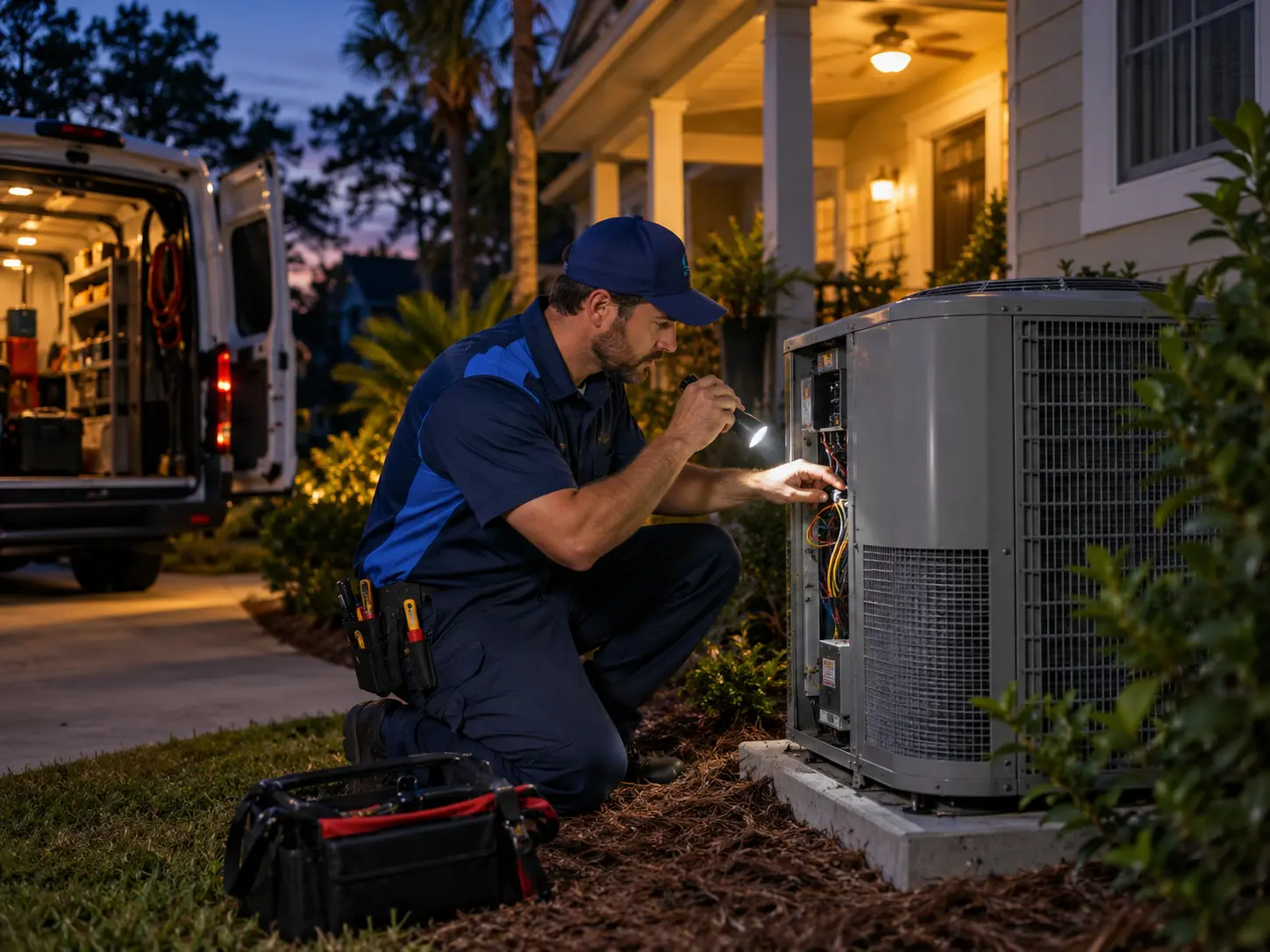
- The outdoor disconnect box next to the condenser, in case it was switched off.
- Whether the system needs a few minutes: many systems have a built-in delay before restarting.
- Whether other circuits in the house are working normally.
A safe step-by-step checklist
Work through these in order. Every step below is something a homeowner can do without tools, without opening equipment panels and without touching any electrical component other than a breaker handle.
- 1Wait several minutes after power returns before expecting the system to start.
- 2Confirm the thermostat has power and the display is lit.
- 3Confirm the thermostat is set to COOL with a setpoint below the current room temperature.
- 4Check the HVAC breakers in your electrical panel — there is usually one for the air handler and one for the outdoor unit.
- 5If a breaker is tripped, reset it only once.
- 6Check whether the indoor blower starts and whether the outdoor unit starts.
- 7Listen for unusual buzzing, humming or repeated clicking at either unit.
- 8Look for a burning smell, smoke, sparking, scorching or visible storm damage.
Stop if any of these happen
If the breaker trips again, the system smells burned, sparks, or makes severe electrical noises, do not keep resetting it. Turn the system off if it can be done safely and request professional help.
The same applies if the outdoor unit was flooded, struck by debris, or is humming without starting.
AC Didn't Come Back After the Storm?
Storm-related no-cooling calls spike across Leon County the morning after a line of thunderstorms moves through. Call 850-790-6261 any hour to be connected with an independent local service provider, or send a short description of what the system is and is not doing.
Availability depends on provider participation, service area and how heavy demand is after a widespread outage.
Why storms cause AC failures
A brief loss and immediate return of power can be harder on equipment than a long outage. Motors attempting to restart against pressure, plus voltage sags, stress capacitors, contactors and control boards.
Surges from nearby lightning can damage control boards and thermostats even when the equipment itself is untouched.
Signs of actual storm damage
Any of these mean stop and request qualified help rather than continuing to try restarts.
- Burning or scorched smell at the air handler or disconnect.
- Breaker that trips immediately every time it is reset.
- Outdoor unit humming without starting.
- Thermostat completely dead with fresh batteries installed.
- Visible damage to the outdoor unit from debris or flooding.
If your outdoor unit was flooded
Standing water reaching the electrical components of a condenser is a genuine safety issue. Do not restore power to it. Have it evaluated before operation, and check whether your insurance covers storm damage.
Reducing risk before the next storm
- Consider a surge protection device on the HVAC circuit.
- Keep the outdoor unit clear of loose yard items that can become debris.
- Trim vegetation away from the condenser.
- Know where your breakers and outdoor disconnect are before you need them.
Need Help With This Today?
Call for 24/7 residential AC help in Tallahassee, or send a short description of what your system is doing.
Frequently Asked Questions
Common reasons include a tripped breaker, a blown low-voltage fuse, a thermostat that lost power, or a built-in restart delay. Storm-related component damage is also possible.