Signs of a refrigerant leak
- Cooling that has gradually declined over weeks rather than failing suddenly.
- Longer run times with less temperature drop across the vents.
- Ice forming on the indoor coil or the larger copper line at the outdoor unit.
- A faint hissing or bubbling sound near the indoor coil.
- Higher indoor humidity even when the temperature is close to setpoint.
- A system that was charged last season and is low again.
How leaks are located
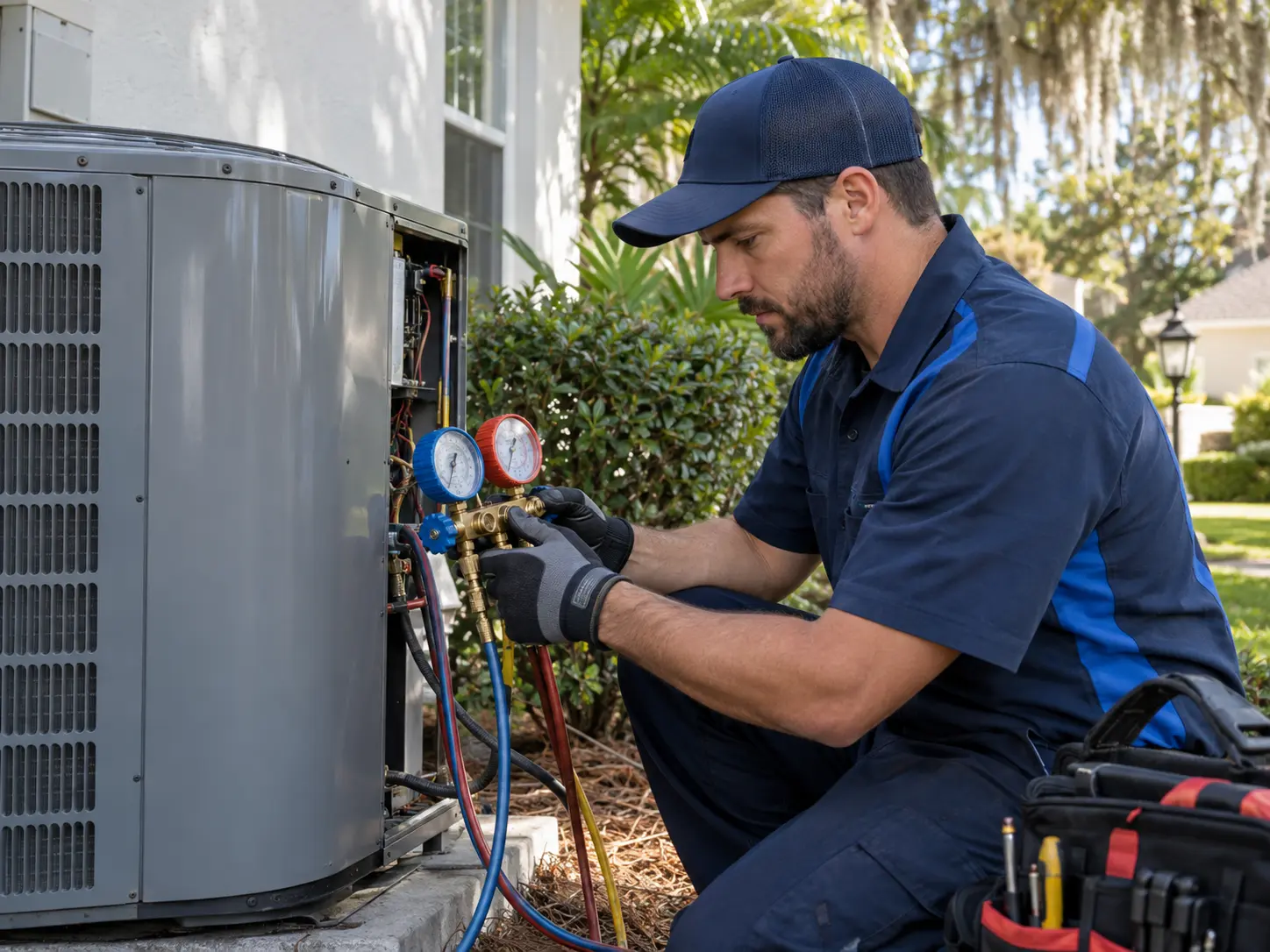
Providers typically use electronic detectors, bubble solution at fittings, or injected dye combined with a UV lamp on a return visit. Pressure and temperature readings help confirm whether charge is actually low before any search begins.
Common leak points include coil returns and U-bends, service valve cores, brazed joints, and line sets that have rubbed against framing or been damaged during landscaping or construction work.
Why simply adding refrigerant is a stopgap
Recharging a leaking system restores cooling temporarily, but the refrigerant escapes again — sometimes within weeks. It also allows moisture and air into the circuit over time, which creates acids and shortens compressor life.
There is also a cost angle. Older systems using R-22 face limited and expensive supply, which affects whether repeated charging makes financial sense at all.
Repair or replace after a leak?
- An accessible leak at a fitting or valve on a newer system is usually a straightforward repair.
- A leaking evaporator or condenser coil is a larger job, and coil availability varies by equipment age.
- Multiple leaks, or a leak on a system that has already needed refrigerant more than once, generally shifts the discussion toward replacement.
- Refrigerant type matters: R-22 systems face supply constraints, and mixing or converting refrigerants is not a casual decision.
Safety note
Refrigerant handling is regulated and requires certification and recovery equipment. Homeowners should not attempt to add refrigerant using retail cans, which frequently leads to overcharging and compressor damage.
Need Help With This Today?
Call for 24/7 residential AC help in Tallahassee, or send a short description of what your system is doing.
Frequently Asked Questions
Only measurement confirms it. Suggestive signs include gradual cooling loss, ice on the lines, long run times and rising indoor humidity, but airflow problems can look similar.