Situations homeowners usually treat as emergencies
- Complete cooling failure during high heat, particularly with infants, older adults, pets or heat-sensitive medical conditions in the home.
- A burning, hot-plastic or electrical smell coming from the air handler or the outdoor unit.
- A breaker that trips repeatedly when the system starts.
- Active water leaking around an indoor air handler, especially in an attic or a closet above finished ceilings.
- A system frozen solid with ice on the refrigerant lines or the indoor coil.
- An outdoor condenser that hums, buzzes or does nothing while the thermostat calls for cooling.
- A thermostat or system that has stopped responding entirely after a storm or outage.
Safety first: what to do before help arrives
If you smell burning, see sparking, or notice scorched wiring, shut the system off at the thermostat and, if it can be done safely, at the breaker. Do not restart it to see whether the smell returns.
If a breaker trips, reset it once. A second trip means something is drawing current it should not, and repeated resets can turn a repairable fault into a larger one.
If water is dripping near an air handler, turn the system off and place a container to protect flooring and ceilings. If ice is visible, switch to fan-only so the coil can thaw.
Staying comfortable while you wait
- Close blinds and curtains on the sun-facing side of the house — western exposure matters most in the late afternoon.
- Run ceiling and box fans to keep air moving; moving air makes higher humidity more tolerable.
- Avoid the oven and dryer, which add both heat and moisture indoors.
- Drink water regularly, and check on neighbors and family who are more vulnerable to heat.
- If indoor temperatures become unsafe, relocate temporarily rather than waiting it out.
What after-hours diagnosis typically involves
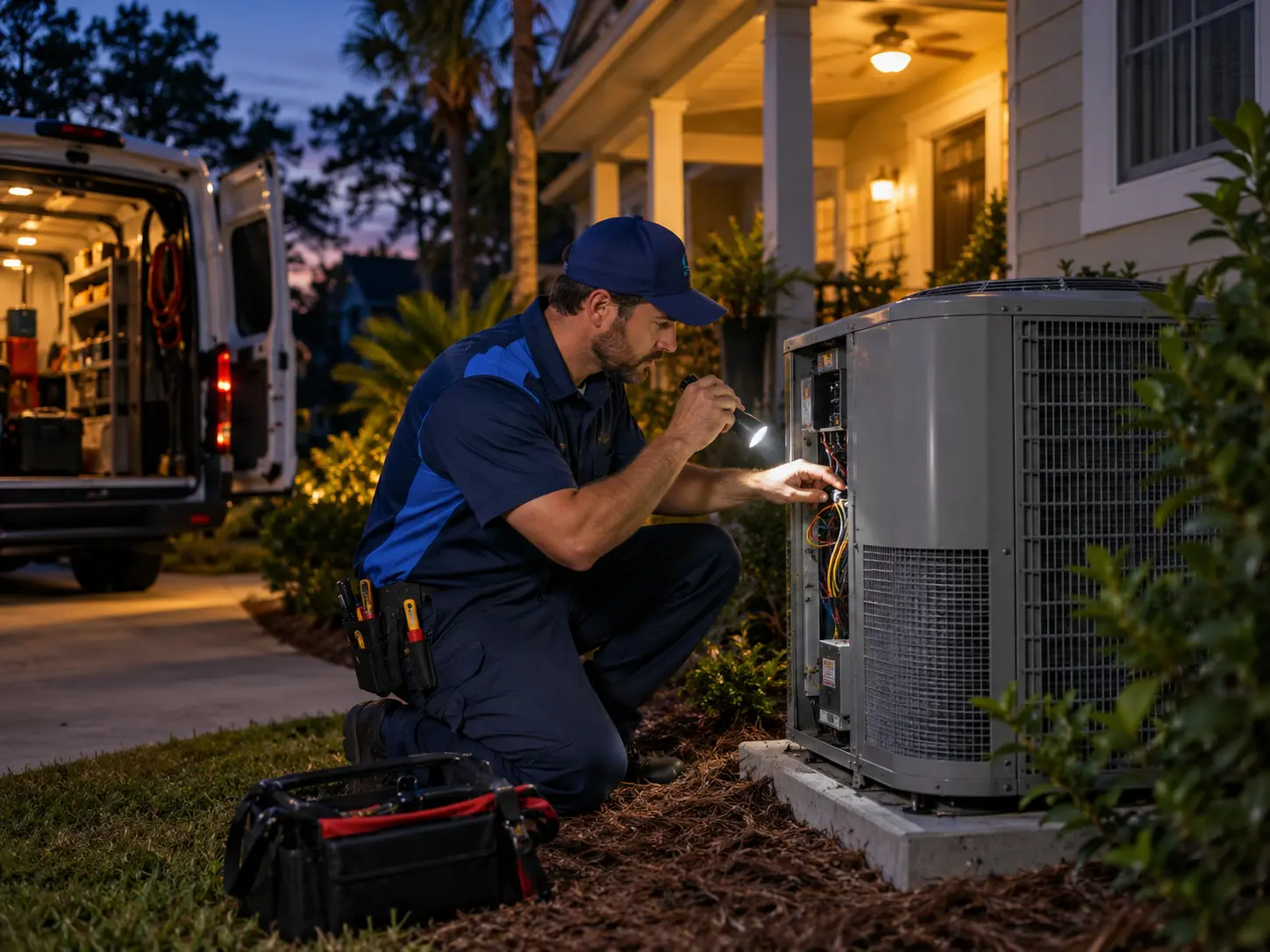
Evening and overnight calls generally focus on restoring safe operation: verifying power and controls, checking the most common failure points such as capacitors and contactors, clearing a blocked condensate switch, or confirming that a compressor or motor has failed.
Some repairs can be completed on the spot; others require a part that has to be sourced during business hours. A provider should tell you which situation you are in and what a temporary plan looks like.
Storms, outages and Tallahassee summers
Afternoon thunderstorms are part of the pattern here from June through September, and the resulting outages and voltage sags are hard on compressors and control boards. After power is restored, systems sometimes need a few minutes before they will restart, and some thermostats need to be reset.
If the system does not come back after an outage, check the breakers, the disconnect at the outdoor unit and the thermostat display before assuming the worst.
Need Help With This Today?
Call for 24/7 residential AC help in Tallahassee, or send a short description of what your system is doing.
Frequently Asked Questions
Requests are accepted 24/7. Actual service depends on provider participation, service area, technician availability, demand and appointment capacity, so availability is not guaranteed.